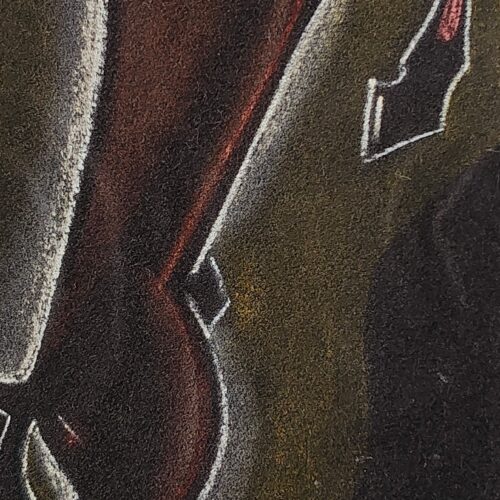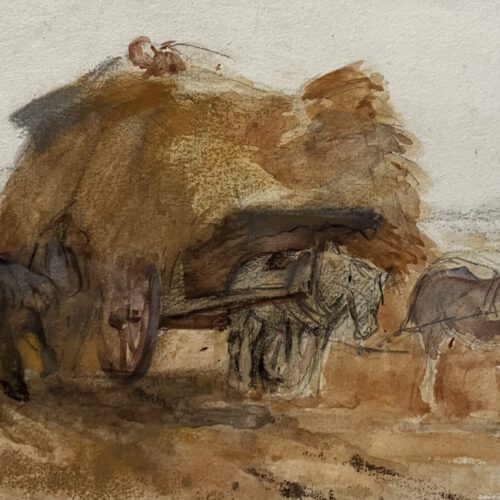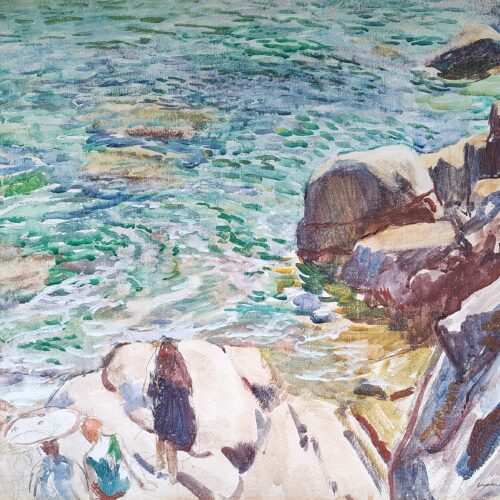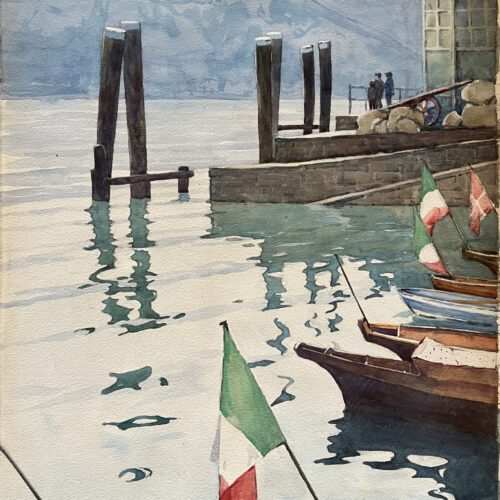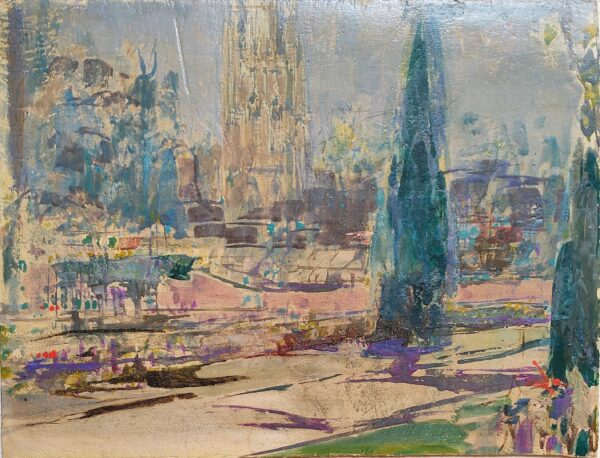
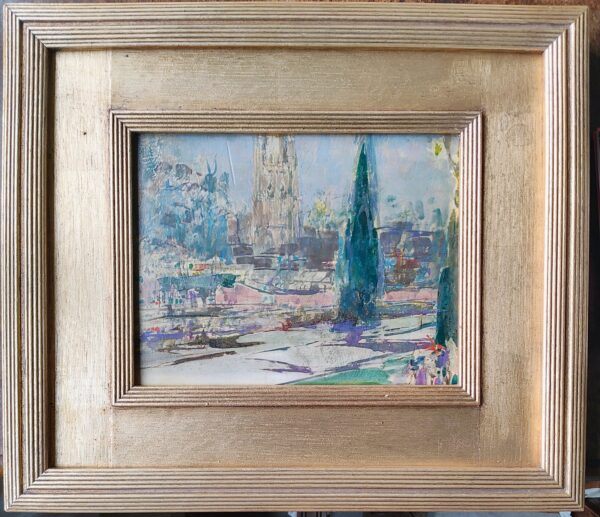
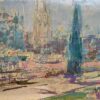
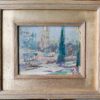
oil on sized and scored card with an architectural drawing on the reverse, Initialled lower right. 7 1/2 ins x 10 ins.
Of Russian/ Scottish descent born in Odessa, Ukraine. Trained in St Petersburg as an architect , working orig professionally in Moscow where examples of his work can still be seen.
In 1906 he moved to London to work as an architect, however having only completed one building, he became a celebrated architectural draughtsman. Exhibiting his work at the RA, RE and RIBA,he started painting full time as a draughtsman but also produced watercolours, etchings and and to lesser extent oils.
He worked for architectural drawings for Edwin Lutyens, Herbert Baker and Aston Webb.
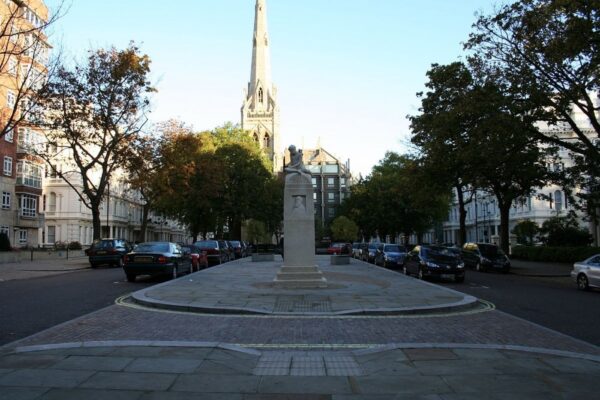
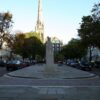
The Spire was formerly the spire of Christ Church, Lancaster Gate, which was knocked down in 1977.
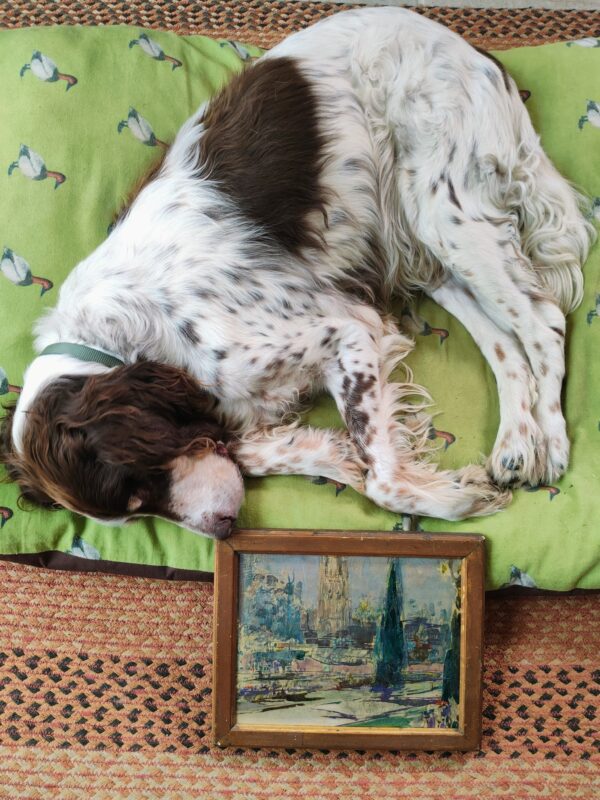
Maurice our setter decided to get in the frame
William Walcot RE (Russian: Вильям Францевич Валькот, romanized: Vilyam Frantsevich Valkot; 10 March 1874 – 21 May 1943) was a Russian-Scottish architect, graphic artist and etcher, notable as an architect of refined Art Nouveau (Style Moderne) in Moscow, Russia. His trademark “Lady’s Head” keystone ornament became the easily recognisable symbol of Russian Style Moderne.
His career to a great extent falls into two halves: up to 1906 he worked as an architect in Russia, mainly in Moscow. Then in 1906 he moved to London, working initially as an architectural draftsman, but from the 1920s also finding considerable success as a printmaker in etching, still mostly on architectural subject matter. He represents one of the leading members of the final phase of the Etching Revival, in a boom which largely collapsed after the Great Crash of 1929.[1]